Rust Wikipedia: The Complete Survival MMO Encyclopedia
From nakeds on the beach to endgame raiding - the most comprehensive 10,000+ word guide to Facepunch's brutal survival phenomenon
🔥 Introduction: What Makes Rust Unique?
Rust isn't just another survival game—it's a social experiment wrapped in a post-apocalyptic playground where every decision carries weight. Developed by Facepunch Studios, this multiplayer-only title has evolved from a simple DayZ clone into a cultural phenomenon with over 150,000 concurrent players monthly. The game's core premise is brutal simplicity: survive, build, dominate.
What sets Rust apart is its unforgiving player-versus-player (PvP) environment. Unlike other survival titles that offer PvE alternatives, Rust forces interaction with other players who can (and will) kill you for your resources. This creates emergent storytelling that developers could never script. Remember the naked man with a rock who betrayed your trust? That's Rust. The massive clan that raided your 10-hour base overnight? That's Rust. The unexpected alliance that lasted three wipes? That's Rust too.
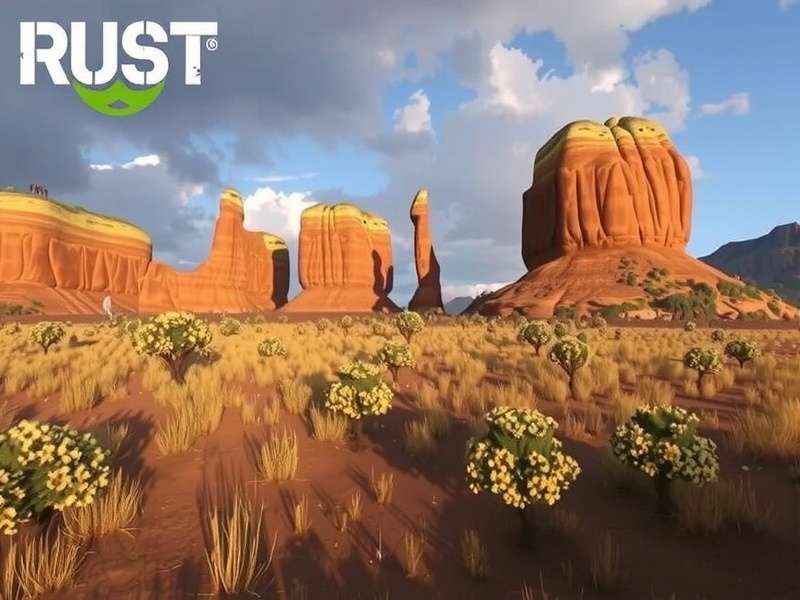
High-stakes PvP combat defines the Rust experience - every encounter could mean losing everything
The Rust Ecosystem: More Than Just a Game
Rust has spawned an entire ecosystem beyond the game itself. From competitive esports tournaments like the Rust Championship Series to massive content creation communities on Twitch and YouTube, the game's influence extends far beyond its code. Notable streamers like Trausi, Frost, and hJune have built careers around Rust's compelling gameplay loops.
The game's economy is equally fascinating. Virtual item trading through third-party sites creates real-world value for in-game items, while server communities develop their own micro-economies with established trade routes and currency systems (often using scrap or sulfur as base units).
🎮 Core Gameplay Mechanics Deep Dive
Understanding Rust's fundamental systems is crucial for survival. Let's break down the mechanics that make the game tick.
Survival Systems: Hunger, Thirst, and Temperature
Rust's survival systems are deceptively simple but critically important. Your character needs food, water, and appropriate clothing to survive environmental conditions. The map features three distinct biomes (desert, temperate, and snow) each with unique challenges. Desert areas offer more components but extreme heat, while snow biomes provide better node yields but require warm clothing.
Metabolism Rework (2021 Update)
The 2021 metabolism rework fundamentally changed survival mechanics. Instead of generic "hunger" and "thirst" bars, players now manage:
Food now provides specific nutrients (carbs, protein, vitamins, water) that affect health regeneration, maximum health, and radiation resistance. This system encourages dietary diversity and makes early-game fishing and farming more valuable. For example, eating only corn will fill your hunger but won't provide the protein needed for optimal health regeneration.
Radiation & Monument Exploration
Rust's world is dotted with monuments—abandoned structures ranging from simple gas stations to massive military tunnels. These areas contain valuable loot but are protected by radiation and sometimes scientists (NPC enemies). Understanding radiation mechanics is essential for successful monument runs.
Different monuments require varying levels of radiation protection:
- Gas Station: Basic clothing (10% protection)
- Supermarket: Cloth outfit (25% protection)
- Airfield: Hazmat suit required (100% protection)
- Launch Site: Full rad suit + pills
- Military Tunnels: Full protection + strategic planning
The Rust Game Meaning page explores deeper philosophical aspects of these hazardous environments and player behavior within them.
⚔️ Weapons & Combat Meta Analysis
Combat in Rust has evolved through numerous iterations, with the current meta favoring a balance between skill-based gunplay and strategic positioning.
Weapon Tier System
Rust weapons fall into distinct tiers that correspond to their crafting requirements and effectiveness:
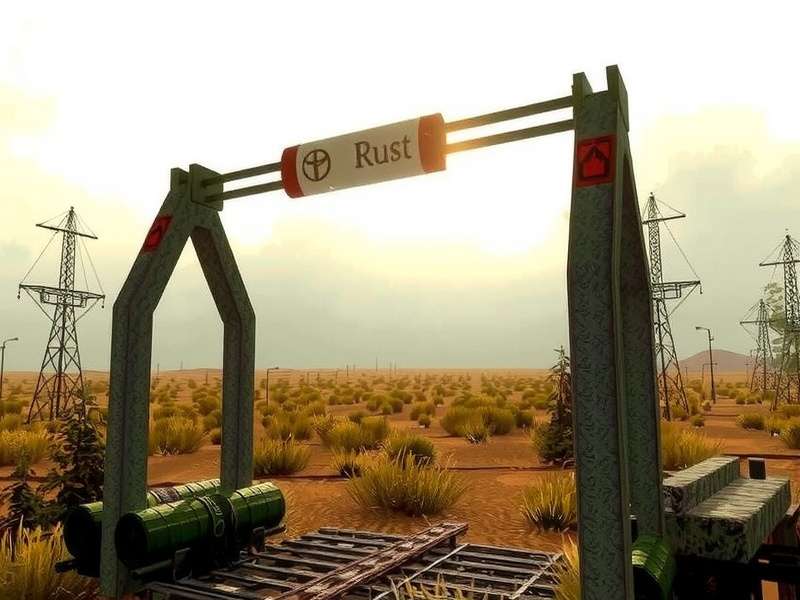
Weapon progression follows a logical path from primitive tools to advanced military hardware
Tier 1: Primitive Weapons
Starting weapons that require minimal resources but remain useful throughout a wipe:
The bow and arrow is arguably Rust's most iconic weapon. With proper skill, experienced players can take down fully-geared opponents using only primitive weapons. The hunting bow fires faster but deals less damage than the regular bow, creating meaningful choice even at this basic level.
Tier 2: Early Firearms
Weapons like the Custom SMG, Double Barrel Shotgun, and Semi-Automatic Rifle represent the first real firepower leap. These weapons require workbench level 1 and are typically acquired within the first few hours of a fresh wipe.
Mastering the Double Barrel Shotgun is a rite of passage for Rust players. Its two-shot capacity demands perfect timing and positioning, but when used correctly (especially in close-quarters base defense), it can defeat even the best-equipped opponents.
Tier 3: Military Grade
The endgame arsenal includes weapons like the Assault Rifle (AK), Bolt Action Rifle, and LR-300. These require workbench level 3 and are typically obtained through monument puzzles, helicopter drops, or defeating other well-geared players.
The AK-47 meta has dominated Rust for years, though recent updates have attempted to balance its dominance. Its high damage output and versatility make it the preferred choice for experienced players, though its significant recoil pattern requires hundreds of hours to master completely.
🏰 Advanced Base Building Strategies
Base building in Rust is equal parts architecture and psychological warfare. Your base isn't just storage—it's a statement, a deterrent, and your most important asset.
Foundation Design Principles
Successful bases follow core design principles that maximize defense while minimizing resource expenditure:
- Triangle Foundations: More efficient than squares for honeycombing
- Airlock Design: Minimum 2-door entry system to prevent door camping
- Honeycombing: Additional layers of walls around core areas
- Multi-TC Design: Multiple tool cupboards to prevent griefing
- Peak-Through Designs: Shooting slots that minimize exposure
The Evolution of Meta Designs
Base designs have evolved dramatically since Rust's early days. The current meta favors bunker bases that can be sealed with a single building piece, making them incredibly raid-resistant. These designs exploit building mechanics to create virtually unraidable cores without excessive resource investment.
For visual examples of cutting-edge base designs, check out our Rust Game Images gallery featuring screenshots from top builders.
Raid Defense & Offense
Understanding raid mechanics is crucial for both defending your base and successfully attacking others.
The raid cost calculator mentality dominates strategic thinking. Experienced players calculate exactly how much sulfur (and therefore time) it would take to raid their base, then design to make that cost prohibitively high. Common defenses include:
Auto Turrets: The most reliable defense, but expensive to maintain with electricity and ammunition. Placement is key—turrets should cover blind spots and be positioned to minimize rocket splash damage.
Shotgun Traps: Cheaper than turrets but less reliable. Best used in airlocks and choke points where players must pass through.
Flame Turrets: Excellent for anti-personnel defense but useless against armored raiders. Often used in combination with other traps.
📈 The Progression System: Scrap, Tech Tree, and Workbenches
Rust's progression system has undergone multiple complete overhauls, with the current scrap-based system representing the most refined iteration yet.
Scrap: Rust's Universal Currency
Scrap is the lifeblood of Rust's progression system. This resource is obtained primarily through:
- Monument Puzzles: Launch Site gives ~500 scrap per run
- Oil Rig Scientists: ~400 scrap plus components
- Recycler Processing: Components → scrap conversion
- Barrel Farming: Basic but consistent early-game
- Player Trading: High-risk, high-reward
The Tech Tree System
Introduced to reduce RNG in progression, the tech tree allows players to research specific items by spending scrap at workbenches. The system creates meaningful choices—do you research essential items first or save scrap to advance workbench levels?
Smart tech tree navigation separates successful solos and small groups from those who struggle. The optimal path typically involves:
1. Essential tools (pickaxe, hatchet)
2. Basic weapons (bow, revolver)
3. Building essentials (ladder, ladder hatch)
4. Raid tools (explosives, satchel charges)
5. Endgame gear (rocket launcher, C4)
For detailed progression guides, including optimal tech tree paths for different playstyles, visit our Rust Game Download Windows page which includes beginner resources.
Workbench Tiers
The three workbench levels (1, 2, and 3) gatekeep access to increasingly powerful items:
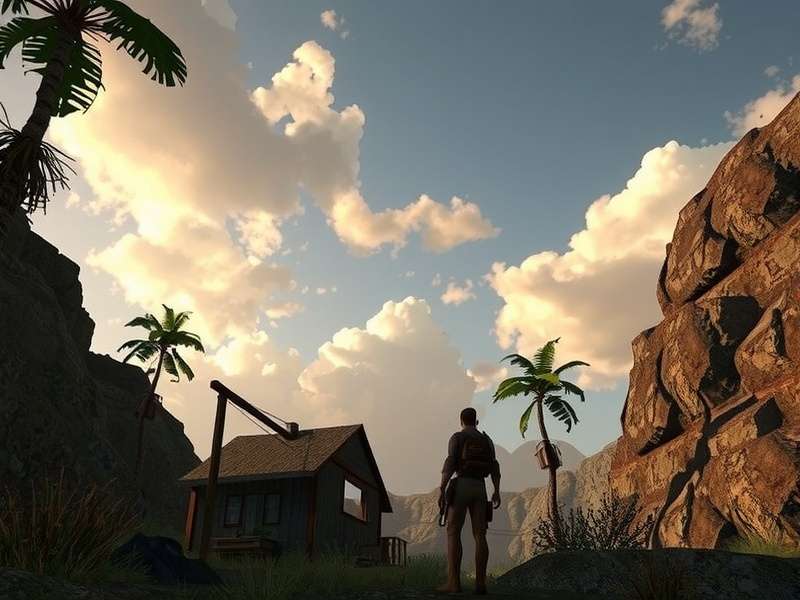
Workbench progression represents Rust's core gameplay loop - gather, craft, advance
Workbench Level 1 (500 scrap): Early-game essentials. Most groups aim to have this within the first hour of a fresh wipe.
Workbench Level 2 (1250 scrap): Mid-game power spike. Unlocked weapons like the Thompson and Semi-Automatic Rifle significantly increase combat effectiveness.
Workbench Level 3 (2500 scrap): Endgame access. The single largest scrap investment, but unlocks the most powerful items in the game including rocket launchers and assault rifles.
📜 Development History & Evolution
Rust's development journey is as fascinating as the game itself. From its controversial beginnings to its current polished state, the game has transformed dramatically.
Early Legacy (2013-2016)
Originally conceived as a DayZ clone with base building elements, early Rust (now called "Rust Legacy") featured vastly different mechanics. The map was randomly generated, zombies were the primary threat (later replaced by animals due to copyright concerns), and building placement was grid-based.
The XP system (2016) represented Rust's first major progression overhaul. Players earned XP through actions and could spend it to unlock blueprints. While innovative, the system was heavily criticized for forcing grind and was eventually replaced.
Modern Rust (2018-Present)
The "Component System" (2017) and subsequent "Scrap System" (2018) established the core gameplay loop that exists today. Facepunch shifted focus toward monthly content updates, each introducing new weapons, monuments, or mechanics.
Notable updates include:
Helicopters (2019): Added aerial mobility and new PvE threats (patrol helicopter).
Electricity (2019): Transformed base building with complex circuit systems for traps, lighting, and automation.
HDRP Overhaul (2020): Complete graphical rebuild that significantly improved visuals but initially caused performance issues.
Underwater Labs (2021): Introduced fully submerged monuments with unique gameplay mechanics.
Fishing Village (2022): Added safe zones and NPC trading, reducing early-game toxicity.
Console Ports and Expanding Platforms
Rust's 2021 console release (PS4, PS5, Xbox One, Xbox Series X/S) brought the game to new audiences but faced criticism for performance issues and delayed updates compared to PC. The console version operates on a separate development branch with optimizations for controller play.
Rate This Rust Guide
How helpful was this comprehensive Rust Wikipedia? Your rating helps us improve content for all players.
Community Discussion
Share your Rust experiences, strategies, or ask questions about the game. All comments are moderated to maintain constructive discussion.
🔮 The Future of Rust
As Rust approaches its second decade, Facepunch Studios shows no signs of slowing development. Based on roadmaps and developer comments, several key areas are likely to receive attention:
Upcoming Features & Improvements
Performance Optimization: Continued work on the HDRP pipeline to improve frame rates, especially for mid-range systems.
New Monument Types: Datamining suggests possible arctic research facilities and expanded underwater content.
Vehicle Overhaul: Scrapped cars and modular vehicle building systems have been hinted at for years and may finally materialize.
Advanced AI: Improvements to scientist AI and possibly new hostile wildlife or NPC types.
The Rust Legacy
Regardless of future updates, Rust has already secured its place in gaming history. It demonstrated that player-driven narratives could be more compelling than scripted content, influenced countless survival games that followed, and created one of gaming's most dedicated (if sometimes toxic) communities.