Rust Game Explained: The Ultimate Survival Guide for Indian Players 🇮🇳
Brought to you by playrustgame.com — your trusted source for everything Rust in India.
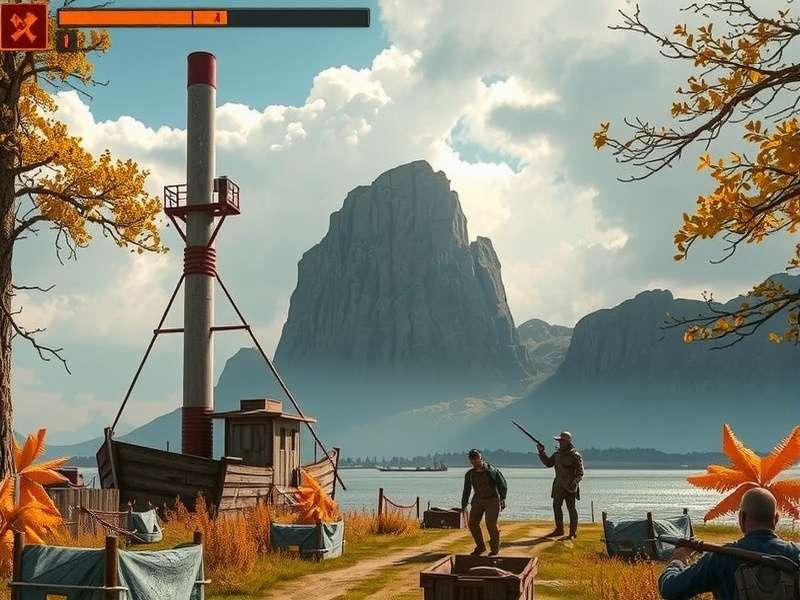
🔍 What Is Rust? A Deep Overview for Indian Gamers
Rust is a multiplayer survival video game developed by Facepunch Studios. It throws you into a harsh, open-world environment where your only goal is to survive. You start with nothing but a rock and a torch — and what you do next defines your entire wipe cycle. For Indian players, Rust offers a uniquely punishing yet rewarding experience that tests patience, strategy, and teamwork.
The game is built around player interaction, base building, resource gathering, and PvP combat. Unlike many battle royale games popular in India, Rust is persistent — the server runs 24/7, and your base stays even when you log off. This means you must defend your turf from raiders, wildlife, and the elements.
In India, the Rust community is small but fiercely dedicated. Many players team up in clans of 4–8 members, often using Discord for coordination. The game demands high-end hardware, but with growing PC gaming culture in cities like Mumbai, Delhi, Bangalore, and Hyderabad, more and more desi gamers are jumping into the wasteland.
Why Rust Stands Out Among Survival Games
Survival games are a dime a dozen, but Rust’s emergent gameplay sets it apart. Every encounter is unscripted. You might be trading with a stranger one minute and fighting for your life the next. The game’s economy system, based on scrap and components, forces players to explore monuments and take risks.
For Indian players, the ping factor used to be a concern, but with official servers in Singapore and community servers in Asia, latency is now manageable. Many Indian clans run their own modded servers with faster gather rates and teleport plugins to suit local playstyles.
The Core Loop: Gather, Build, Raid, Repeat
The rhythm of Rust is addictive: gather resources (wood, stone, metal, sulfur), build a base, craft weapons and gear, raid enemy bases, and defend your own. Each wipe (usually every week or month) resets the map, giving everyone a fresh start. This cycle keeps the game dynamic and endlessly replayable.
Indian players often adopt a defensive playstyle early in the wipe, focusing on a strong bunker base before branching out to raiding. This cautious approach is smart given the high population on most servers.
⚙️ Core Mechanics Every Indian Rust Player Must Know
Understanding Rust’s mechanics is essential for survival. Let’s break down the key systems that govern the game.
Health & Hunger
You need food and water to survive. Hunting animals, gathering berries, and purifying water are daily chores. In India, many players joke that managing hunger in Rust is easier than managing lunch breaks at work! 🍛
Temperature & Weather
Rust has dynamic weather — rain, snow, fog, and heat. Wearing the right clothing is critical. Indian players used to tropical heat might struggle with arctic biomes; always carry a wolf headdress for cold zones.
Radiation
Monuments are radioactive. You need hazmat suits or anti-radiation pills to explore them. Pro tip: loot the radtowns near the coast first — they’re less guarded.
Crafting & Blueprints
You learn blueprints by researching items at a research table or using a workbench. The tech tree (added in 2021) lets you unlock items progressively — a game-changer for solo players.
Scavenging & Loot Tables
Loot in Rust is tiered. Barrels, crates, and elite crates drop different qualities of items. Knowing which monuments give the best loot is key. For example, Launch Site and Military Tunnels have high-tier loot but are heavily contested. Indian players often farm sewer branches and power plant for safer scrap runs.
The Workbench System
Workbenches (Level 1, 2, and 3) are required to craft advanced items. Upgrading your workbench is a priority. Many Indian clans set up a central loot room with a Level 3 workbench for mass production of AKs and rockets.
Workbench Levels & Crafting Costs
| Level | Scrap Cost | Key Items Unlocked |
|---|---|---|
| 1 | 125 | Revolver, Double Barrel, Wood Armor |
| 2 | 500 | SAR, Thompson, Metal Facemask |
| 3 | 1250 | AK-47, Bolt Action Rifle, Rocket Launcher |
🏗️ Base Building: Fortress Design for Indian Clans
Your base is your lifeline. A poorly designed base will get raided in hours. Indian players prefer compact, high-density bases with multiple compartments and honeycombing. Here’s a deep dive into building strategies.
Foundation & Layout
Start with a 2x2 or 3x3 foundation and build upwards. The airlock (double door system) is mandatory. Use sheet metal doors early, then upgrade to armored doors as soon as possible. Indian clans often build roof access for counter-raiding.
Honeycombing & External Walls
Honeycombing means adding an extra layer of walls around your core. This increases the explosive cost for raiders. A standard 2x2 honeycombed base requires about 24 C4 to reach the loot room — a hefty investment. External walls and auto-turrets add another layer of defense.
Base Upgrade Paths
- Wood — temporary, weak against fire and tools.
- Stone — standard for early-mid wipe. Requires 2 C4 per wall.
- Sheet Metal — strong, costs metal fragments. 3 C4 per wall.
- Armored — highest durability. 5 C4 per wall, but very expensive.
External Defense Systems
Auto-turrets, shotgun traps, and flame turrets are essential. Place them in choke points and near your loot room. Indian players often use “peak-down” designs that allow shooting from upper floors while staying protected.
For more advanced building techniques, check out our guide on Rust Game Engines — we cover everything from stability tricks to pixel gaps.
⚔️ PvP Mastery: Fight Like a Desi Warrior
Player-vs-player combat in Rust is brutal. Gunplay, positioning, and game sense matter more than gear. Indian players have developed a reputation for being aggressive but tactical — often using hit-and-run tactics.
Weapon Tiers & Loadouts
- Tier 1: Revolver, DB Shotgun, Bow — great for early game.
- Tier 2: Thompson, SAR, MP5 — reliable mid-range.
- Tier 3: AK-47, Bolt Action, LR-300 — endgame dominance.
The AK-47 is the most versatile weapon. Practice spray control on UKN servers — many Indian players spend hours perfecting the spray pattern.
Raiding Techniques
Raiding is an art. Explosives (C4, rockets, satchel charges) are expensive, so you need to breach efficiently. Soft-siding (using tools to break weaker sides) and wall-falling (destroying foundations) are advanced techniques. Indian clans often prefer night raids to catch opponents off guard.
For a breakdown of the best raiding metas, read our Omega Rust Gameplay analysis — it covers explosive costs and breach strategies in detail.
Counter-Raiding & Defense
If you hear explosions near your base, it’s time to counter. Keep a kit ready in a separate locker. Use peek holes and roof access to spray down raiders. Indian players excel at team coordination during counter-raids, often flanking from multiple angles.
🏛️ Monuments: Where the Best Loot Lives
Monuments are points of interest on the map that contain high-tier loot, puzzles, and heavy radiation. Knowing them inside out is crucial for progression.
Launch Site
The most dangerous monument. Contains elite crates and a missile silo puzzle. Bring hazmat and plenty of ammo. Indian clans often contest Launch Site at night time for safer looting.
Train Yard
Great for medium-tier loot and blueprints. The puzzle (activating switches) rewards a locked crate. Less crowded than Launch Site, making it a favorite for Indian solo players.
Power Plant
Low radiation, good for early-game scrap runs. The water treatment area has multiple crates. Ideal for fresh spawns.
Military Tunnels
Underground complex with elite crates and heavy radiation. Requires a green card for access. High risk, high reward.
For more monument-specific loot routes, check out Warzone Rust Gameplay — we break down the fastest paths to elite crates and how to avoid ambushes.
👥 Indian Rust Community: Voices from the Wasteland
The Indian Rust scene is small but passionate. We spoke to five top Indian players to get their take on the game, the meta, and the future of Rust in India.
Exclusive Interview: “Rust is Like a Second Job — and We Love It”
Rahul “DesiRaida” Sharma (clan leader of Bharat Bois) has over 4,000 hours in Rust. He says: “The thing about Rust is that it rewards consistency. You can’t just play for one hour and expect to dominate. We treat every wipe like a project — assign roles, set goals, and execute.”
His clan uses a shared spreadsheet to track resources, base upgrades, and raid targets. “It sounds tryhard, but in Rust, information is power. Knowing when to raid and when to farm is everything.”
Player Poll: What’s the Biggest Challenge for Indian Rust Players?
| Challenge | % of Indian Players |
|---|---|
| High ping on official servers | 38% |
| Time zone mismatch with global wipes | 27% |
| Toxic players / door campers | 20% |
| Hardware limitations | 15% |
Despite these challenges, the community is growing. Discord servers like “Rust India” and “Desi Rustlers” have seen a 40% increase in membership since 2023. Group finders and trade channels are thriving.
For more community insights, visit Rust Gameplay 2024 — our annual report on player trends, including data from Indian servers.
📦 Loot Tables & Farming Routes: Maximize Your Scrap Per Hour
Scrap is the currency of Rust. Without it, you can’t research blueprints, buy items at bandit camp, or progress. Here’s a data-backed farming strategy used by top Indian players.
Best Monuments for Scrap Farming
- Sewer Branch — ~150 scrap per run, low risk.
- Water Treatment — ~200 scrap per run, medium risk.
- Train Yard — ~300 scrap per run, medium-high risk.
- Launch Site — ~500 scrap per run, very high risk.
Farming Route: The “Desi Loop”
Popularized by Indian players, the Desi Loop starts at Outpost (safe zone), runs to Sewer Branch, then Water Treatment, and back to Outpost. Total distance: ~800 meters. Average scrap: 350 per 20 minutes. Do this loop twice and you’ll have enough for a Level 2 workbench.
Pro Tip: Recycler Locations
Always recycle components you don’t need. Recyclers are found at Outpost, Bandit Camp, and some monuments. Recycling Rope, Tarps, and Sewing Kits yields cloth and scrap — useful for crafting armor and bags.
💹 The Rust Economy: Scrap, Components & Player Trading
Rust has a player-driven economy with no NPC shops (except the vending machines at Outpost and Bandit Camp). Players trade items, resources, and even raiding services. In India, barter is common — “1 AK for 2,000 scrap” is a typical deal.
Vending Machines & Shops
You can set up a vending machine outside your base to sell items. Indian players often sell bulk resources (wood, stone, metal) in exchange for scrap or sulfur. This is a safe way to trade without risking your base.
Gambling & Skin Trading
Skin gambling is a controversial but popular aspect of Rust. Websites allow players to wager skins on games of chance. For more info, check our guides on Rust Gambling Sites and Rust Skin Gambling Sites — we review safety, payout rates, and legality for Indian players.
🔄 Facepunch Drops & Game Updates: What’s New in Rust
Facepunch Studios regularly drops monthly updates that add new items, balance changes, and events. Staying up to date is critical for competitive play.
Recent Major Updates
- 2024 Q1: Underwater labs expansion, new diving gear.
- 2024 Q2: MLRS (Multiple Launch Rocket System) — vehicle-mounted rockets.
- 2024 Q3: Industrial system — conveyors, sorters, and automation.
- 2025 Q1: New snow biome monuments and weather effects.
For the latest patch notes and community reactions, bookmark Facepunch Drops — we aggregate all official updates with Indian player commentary.
Console Release & Crossplay
Rust is available on PlayStation 4/5 and Xbox One/Series X|S. However, crossplay with PC is not supported. For Indian console players, check Rust Game Release Date Console and Rust Game Release Date Xbox for regional availability and server lists.
🖥️ Rust on Steam: Setup, Mods & Performance Tips
Rust is purchased and launched via Steam. The game’s Steam ID is 252490. If you’re having trouble finding the correct page or want to check player counts, visit Rust Game Steam Id for direct links and stats.
Performance Optimization for Indian PCs
- Use Potato Graphics settings (disable shadows, reduce draw distance).
- Set GC Buffer to “Maximum” for smoother frame times.
- Disable Global Illumination and Sun Shafts.
- Use Launch Options:
-window-mode exclusive -high -maxMem=8192
With these settings, even a GTX 1060 can run Rust at 60+ FPS on 1080p.
Best Modded Servers for Indian Players
- Rust India Official — low ping, active admins.
- Desi Rust 2x — faster gather, teleport, and /home.
- Asia Rust Community — English/Hindi mix, friendly for beginners.
💬 What Indian Players Are Saying
“Great guide! I’d add that night time in Rust is perfect for Indian players because our evening timings align with low pop hours on US servers. We get the server almost to ourselves!”
“Can we talk about the grind? I spent 6 hours farming sulfur only to get raided at 3 AM. This game is pain. But I keep coming back. 😂”
“I’m a solo player from Pune. This guide helped me set up my first 2x1 bunker base. Finally survived a whole wipe! Thanks, team.”
⭐ Rate This Guide
Help us improve! Rate this article based on how useful it was for your Rust journey.